Showing posts with label Politics. Show all posts

Wednesday, June 4, 2014

Brazil and the double edge sword that is the World Cup

I love this logo.

The Expat Blog Police just sent me a final notice. They are going to take away my membership card if I don’t post about the World Cup coming to Brazil.

Everyone has done it. Some bloggers have posted wicked (good and bad) critiques of FIFA and Brazilian politicians who are milking taxpayers for money they don’t have to line their pockets in the name of futebol. Other bloggers have tried to stay positive and posted videos and news bits about players, teams and home town pride in the lead up to the contest. One big theme has been the massive public response in Brazil against the wasteful spending on soon-to-be white elephant mega stadiums (some built in cities that don’t even have a home futebol team!) at the expense of improvements in healthcare, education, urban development and other proper priorities.


My commitment to myself here at Qualidade de Vida has been to keep it positive. Living abroad, living in Brazil, struggling to learn a new language and to adapt to new cultural norms – it’s not an easy road. While there are a ton of really fun and cool things that come your way, there are also some pretty challenging realities that wear on you. The internet machine is full of very vocal people griping about how crappy their life has become since they moved to Brazil and had to turn in their minivan and their dream of a GE Profile PFE29PSDSS refrigerator that automatically fills your water glass without spilling. Truth be told, there are some realities in Brazil worth griping about. But that makes for a lousy blog post, in my opinion.

If you know me you know that I am not a futebol fan. I don’t know the rules of soccer. I have never watched a basket ball game through in its entirety. The gratuitous violence in so many hockey games turns me off. The cultural grip American football has over the social construction of masculinity in the United States makes me sad. Sports have never been my thing. But hey, I get it that others go bonkers over this stuff. It’s all good. Go for it. But please don’t be stupid.


It seemed to me that the World Cup coming to Brazil was potentially a really good thing. Brazilians live and breathe futebol in such an all-consuming way that is difficult (perhaps impossible) to imagine if you don’t live here. This was an opportunity to put that passion on a world stage and really shine. It was an opportunity for Brazilians, the vast majority of whom have relatively little to nothing in terms of daily comforts, to focus on national pride and escape the hardships of their normal waking hours. Somewhere in here was an opportunity to leverage preparation spending to benefit locals in the long run.

But the World Cup is actually a big business venture. Oh yeah, they have international sports heroes play some games and all, but at the end of the day the event – the actual nuts and bolts of the event – is a venture capitalist’s wet dream. And the politicians that get to play with other people’s money? Well they are like pigs in slop. The television networks will make their money. Coca-cola, Budweiser and Visa will reinforce their brand to their followers. And large developers will make a killing on slip shod building projects that shine in the short term and then sit to decay when the cameras shut off.


Are we surprised? Is this unique to Brazil? Sadly no. FIFA has been leaving messes like this in their wake for a generation. The Olympic Committee comes to mind as another culprit of capitalizing on the public’s need to escape our daily drudgery if only for a short while. The Super Bowl folks in the States play this game, selling struggling communities the “privilege” to wave tax policies and local environmental ordinances to build unnecessary stadiums with money they don’t have on the promise of future glory which never comes… blah, blah, blah.

For me the good news is that this kind of corporate greed and political malfeasance is so in your face that the public gets awakened from their sleep and digs in for a chance to speak their mind. The communities displaced by developers making papier mâché facilities stand up and demand to be heard. Tax payers who may typically let a little corruption with public funds go unanswered suddenly say “enough.” A population is reminded who is supposed to be in charge and asserts itself to reestablish that order. Sometimes there is progress. Often times not. But at least people come alive for a short while and new activists are born.


Brazilians all across the country have been speaking up to say “enough.” There is a long political tradition here, like in so many developing countries and elsewhere, of deeply entrenched corruption.  It is endemic in the worst way. The population has largely been beaten into submission and share a feeling of hopelessness when it comes to politicians actually doing anything honest or truly good for the people – without also stealing a boat load of money in the process. But there is also a strong tradition of rebellion. Brazilians are fighters. Don’t forget it was just 30 years ago, in 1984, that widespread, organized, public pressure resulted in the brutal dictatorial government of Brazil surrendering to a popularly installed democratic administration. The taste of people power still lingers in the mouths of many present day citizens.

"Our heroes are teachers, not futebol players."

The current repulsive examples of corrupt politicians, greedy investors, entitled corporations and crony media networks has once again awakened a sleeping giant in Brazil. Students, urban residents, parents, religious leaders, artists, native peoples, labor unions… you name it. Look around – folks are pissed. Some say we are in for another round of people power that will result in real, lasting and proper changes for the better. Others just sigh and try to go back to sleep. We’ll see…


But the World Cup is coming. Billions have been spent. Sports broadcasters from around the globe are settling in for a fun ride. Fans are hoping for the best. And Brazilians still stand among the most enthusiastic fans once their team takes to the field. Politicians be damned – let’s play some futebol!

Wednesday, August 28, 2013

Maintaining our hippie street cred in Brazil


Luiz and I share a parallel path through the 1970s and early 1980s of emulating the hipsters that forged a path before us in our respective countries: me demonstrating against nuclear power and South African Apartheid while living in a vegetarian housing cooperative at Michigan State University and Luiz smoking hand-rolled cigarettes, bucking the military government, and pushing the boundaries of gay life in Rio.

Luiz - Bell bottoms: check; platform sandals: check; photo of Che Guevara: check.
Rocky Horror Picture Show T: check.

Much of the hippie heavy lifting in the States had been done by the time I came along. The struggle to get the USA out of the Vietnam War had been won and it was then commonplace for young people to experiment more openly with sex and drugs. For me, in addition to my stints on the board of directors at the local food and housing cooperatives and cutting my activist teeth on pro-feminist and other social justice issues, I was hit broadside in 1978 when a man named Harvey Milk was assassinated in San Francisco – thus setting the stage for those many years to come.


Brazilians, on the other hand, were still very much in the thick of things. The late seventies and early eighties saw growing opposition to Brazil’s oppressive military dictatorship, which had been installed against a left-leaning president with the backing of hard-line capitalist politicians, media moguls, the Catholic church, landowners and businessmen in 1964 (funny how this motley crew is so often on the wrong side of history). In 1979 forceful student and trade union struggles against the government bore some fruit with the government’s passing of an amnesty law that allowed previously exiled (and often tortured) activists to return to Brazil (however, in the trade-off it also shielded pro-government human rights violators from prosecution) and relaxed restrictions on civil liberties. It was not until 1984 that a democratic election would be held with civilian candidates setting the stage for the passage of Brazil’s current constitution in 1988.

The number one song in Brazil in 1979 was O Bêbado e a Equilibrista ("The Drunk and the Tightrope Walker") which made famous the lyrics sonha com a volta do irmão de Hefil ("dreaming of the return of Henfil's brother"), referring to the return of artists and other activists sent into exile by the government. Listen below - and for a translation of the lyrics go here.


Gaining the right to free speech is not exactly ancient history here in Brazil.

For his part, Luiz walked a fine line between giving voice to gay pride and liberation and getting the crap beaten out of him by homophobes and corrupt cops. As you might expect, his push back was always outrageous and highly fashionable.

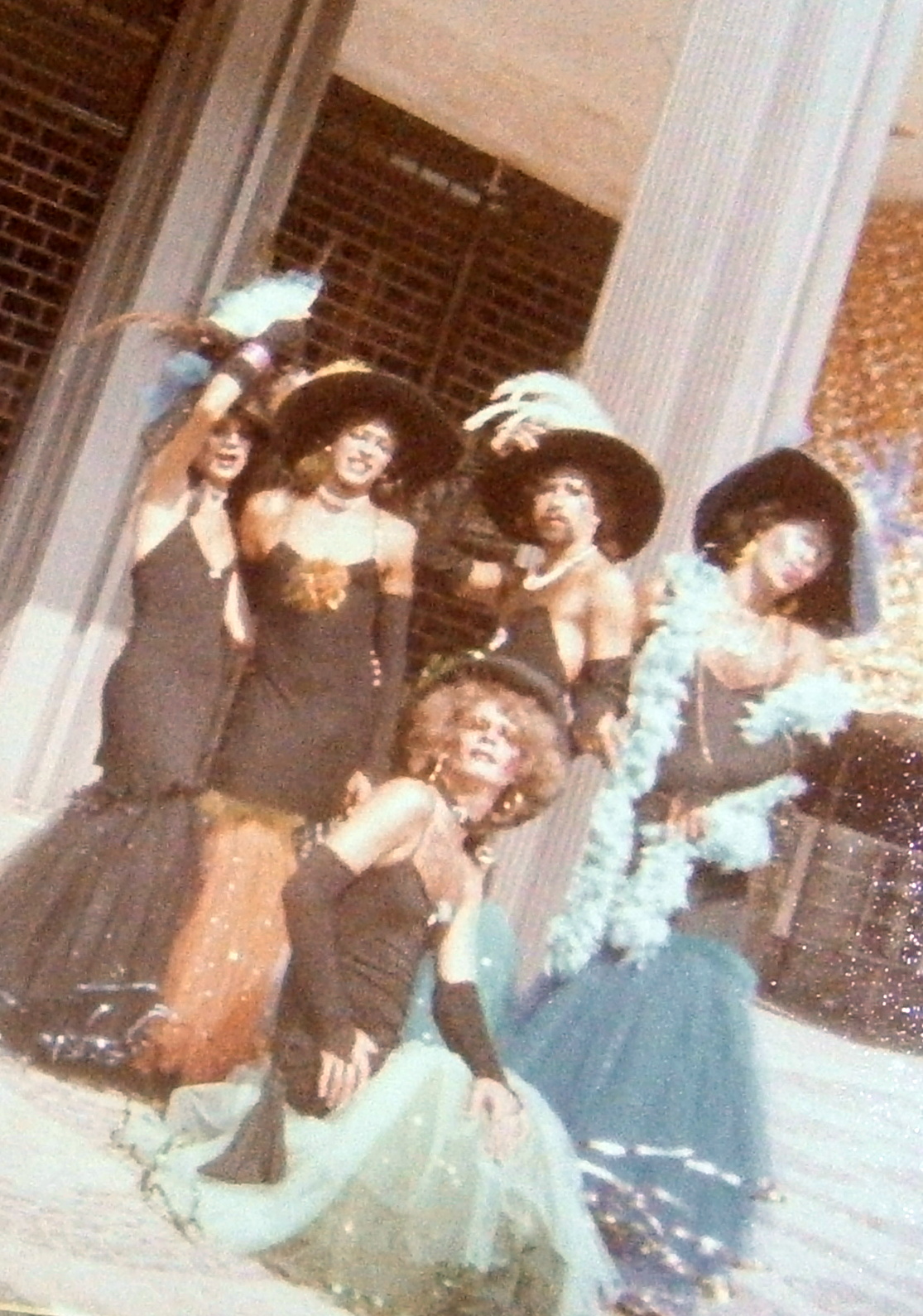
Luiz (center left) with his grrlfriends at Carnaval.

Nowadays things have calmed a bit. Gay folks in Brazil are mostly afforded many of the same rights as our straight counterparts, with notable exceptions, and the last two presidents have been left-of-center populists that have, for the most part, overseen an economic and social resurgence that enjoys widespread support by the electorate, again, with notable exceptions.

The current climate of push back against government corruption and incompetence should not be mistaken as general dissatisfaction with progressive politics, but rather impatience regarding how slowly this thrice elected, preferred political strategy has resulted in real change on the ground in local communities and the widespread desire for the radical (as in, “by the roots”) expulsion of corrupt politicians and many civil employees.

Aside from our deliberate and unmistakable “out” lifestyle and my utilizing (sometimes surreptitiously) my position as teacher to encourage students to think through the value of political engagement as a strategy to improve Brazil for all, Luiz and I feel the love of our hippie days in the kitchen (and through sex and drugs J ).


My early vegetarian/crunchy/granola days continue to shine through, much to Luiz’s dismay. Meat is now definitely on the menu in our household, but so are homemade yogurt, bread and peanut butter. My efforts to learn the art of Brazilian cooking from Luiz have been slowed by my insistence on maintaining some old favorites in our diet. While I feel that my hippie street cred is definitely bound up with my cooking habits, Luiz is happy to continue to eat just what his mother used to prepare for him as a kid and focus on living a party lifestyle.


There is a happy medium here somewhere. But while we struggle to find it, I am delighted to explore the world of organic street markets, mountain goat farms, home grown tomatoes and natural food stores. Luiz is mollified by my tossing him a bone in the form of homemade rich and creamy chocolate ice cream. There is hippie bliss tucked in among the cheese, vegetables and fresh desserts.

Monday, August 5, 2013

Brazil is a Third World country, remember?


Lately all eyes have been on Brazil. Whether you are a fan of the pope and watched as millions descended on Rio while it stretched its capacity to host enormous crowds, or an international travel agent already booking lodging and sightseeing packages for upcoming World Cup and Olympics visitors, or an ambitious investment fund manager making exciting new inroads into the Brazilian market that has (until recently) been outperforming many of the tired and failing options in your home country – chances are you have been wide-eyed about Brazil and its explosion onto the world stage as an all around powerhouse and emerging world hot spot.

Outside perceptions and media generalities can be deceiving.

A lot of people don’t like it when you refer to Brazil as a Third World country, especially some Brazilians. My experience, however, has been that it is Brazilians in particular that default to this kind of language. Some residents seem to use this expression as a way to explain away or justify some of the current national shortcomings and others, especially those now living abroad, would seem to use it to justify to themselves why they left their country in the first place.

I have steered clear of this label in favor of the more politically correct “developing country” mantle. My intention is to be accurate (i.e. not including Brazil among the so-called First World nations) while also trying not to give an exaggerated impression of undeveloped or backward that people may imagine when hearing “Third World.”

As described in Wikipedia, “Third World” and “developing” are seen as interchangeable terms when describing Brazil, but the term Third World is a bit antiquated since it originally simply referred to countries not aligned with either NATO (First World) or the Communist bloc (Second World). Over time the term Third World has come to be used as an economic term to describe poorer countries that have struggled to attain steady economic development.


There are no universal, agreed-upon criteria for what makes a country developing versus developed and the term Third World is rather squishy. I have come to be comfortable with the term “developing country” to describe Brazil because it seems (to me) to imply hope and real progress, leaving Third World to those times when I want to be deliberately provocative.

As long time readers of this blog know, I love Brazil. Luiz and I have never had second thoughts about our move to here nearly 6 years ago and we have no intentions to relocate any time soon. My blog is filled with all the reasons you might want to join us in this mid-life change of adventure we have created for ourselves. Here there is no shortage of daily wonders to soothe the soul and reinvigorate one’s zest for life. Brazil and Brazilians have a special kind of wow that we have experienced in few other lands – and we have visited many, many places. But yeah, when you peel back the travel brochure cover and look for the fine print, there it is: Brazil is still a developing country.


This comes as no surprise to those of us living here. While the television coverage of the upcoming World Cup and Olympic Games may focus on shiny new sports stadiums and grand openings at fancy new resort hotels, a peek behind the scenes reveals promised modern airports still in the early stages of construction (one still lacking paved roads to and from) and public policies that are displacing poor residents to make room for temporary international tourist conveniences. Rumors of political corruption, stolen public funds, illegal construction code violations and broken promises that urban development for the games will include vital infrastructure improvements for permanent residents take no one by surprise.

Persistent political corruption at all levels and shameless kowtowing to international capitalist pressures spawning shiny new millionaires at the expense of true democratic self determination and shared prosperity are the unfortunate tell tale signs of a “developing country” trying to get sturdy legs under itself. Generations of Brazilians have reluctantly grown accustomed to and somewhat hopeless regarding the stench of this political sewage and the oppressive economic inequality it sustains. Plus there are the pervasive legacy costs of political and family dynasties that have concentrated power and wealth over the years. [According to the celebrated Brazilian economist Marcio Pochman, published in the book “The Rich of Brazil” (2004), the assets of five thousand ‘very rich’ families, which account for 0.001 percent of all Brazilian families, amount to approximately 40% of the Brazilian Gross Domestic Product.]

That’s the bad news.


The good news is that Brazil is, indeed, developing. This development has been at a rather impressive pace in recent decades. Modernization in urban areas, in the commercial sector, in all areas medical and, more slowly, concerning the infrastructure that links vital population and resource centers across the country has been steady and persistent. Political reforms, while slow and somewhat limited in scope, have also been steady. Both dynamics have resulted in real and tangible improvements in the quality of life for tens of millions of Brazilians. And just like everywhere else on the planet, the internet has transformed nearly everything among those with access and among those who benefit in secondary and tertiary ways. Things are definitely looking up (i.e. developing).

What this means for Luiz and I is that, while we live in Brazil, we live in a comfortable two bedroom  apartment just down the street from a beautiful, mature urban park. We wash our clothes in a 10 kilogram capacity washing machine (although, it does not have a hot water option and we do not have a dryer, but hey…) and our refrigerator has a separate (although quite small) freezer compartment. Wireless internet service and an over-sized flat screen TV (with 3-D capability, although there are no 3-D signals in our area) as well as an imported, firm, queen size mattress round out or creature comforts.

Most of our banking is done either online or via an ATM machine, although Luiz has developed a meaningful friendly relationship with our branch manager in case of difficulties. Luiz has a cell phone, while I have eschewed said ball and chain. Most of our transportation needs are covered by bus and ferry services but our friends drive chic new cars that run on gasoline, alcohol and/or natural gas.

Regarding medical needs, we live in an insanely convenient part of town chock full of doctors’ offices, labs, ambulatory clinics, critical care facilities and full-on hospitals. We pay a relatively small monthly fee for supplemental private health care insurance that sweeps us up and over the inconveniences and limitations of the public health system, although in any possible circumstance we have medical care available.


If you squint a little and don’t try too hard to find any cracks, it looks a lot like a First World lifestyle. Most of the time it even feels like a First World lifestyle. But then, if you insist on seeing the glass half empty there is plenty to remind you that things are not all that they might first appear to be. For a listing of daily inconveniences and nearly unbelievable tales of stifling bureaucracies I kindly refer you to other blogs.

Mainly what affords us our comforts is that first and foremost we live in a modern, urban area that has been developing as a Brazilian city for more than 300 years. At some point you get paved roads, clean reliable drinking water, backup electrical power at hospitals and a police force with at least a minimum of training and support [key word: minimum]. Second, there are employment options in the area that provide a livable wage or better, and schools and universities are plentiful [even if they often lack a full complement of functioning light bulbs or ceiling fans].

Not bad, overall. But this is certainly not the case for the multitudes in the population that live in less developed cities and towns, favelas adjacent to rich urban areas and the more desperate rural parts of the country. This is where much of the Third World reality exists.


In Brazil as a whole about 35 per cent of the population lives in poverty, on less than two dollars a day. This is most visually represented by the various favelas, or slums, in the country's metropolitan areas where residents suffer with economic underdevelopment and below-par standards of living. In Brazil’s rural areas poverty affects about 51 per cent of the population. This means that Brazil has about 18 million poor rural people, the largest number in the Western Hemisphere. Poor rural communities live in disadvantaged conditions: education and health facilities are not readily available, water supply and sewage systems are generally inadequate, and rural people face severe constraints in accessing technology and infrastructure. [sourced here]


The degree to which you feel the “developing” part of living in Brazil is directly related to your place on the class ladder. Here people with money generally have A LOT of money and can buy their way into a pretty good facsimile of a First World lifestyle. Poor folks, as usual, are shit out of luck. The oft-touted newly emerging Brazilian middle class (myth for a future post) tends to enjoy just enough of an income to buy into a look-alike First World lifestyle without the political/economic/consumer goods quality underpinnings to back it up. [Aside: the vastly expanded consumer credit market in this regard is a ticking time bomb.]

Visitors to Brazil quickly notice the gulf between the haves and the have-nots. Years of government investments in the tourism sector has bolstered the infrastructure for travelers so they can have more of a modern, convenient experience. Tourists who never leave the beaches in Rio and who cannot understand the Portuguese newsprint or television reports may never know they are vacationing in a developing country.


We who live here know Brazil is in a state of development. The struggles to develop are not subtle or inconsequential to our regular lives. Political push back from the general population against governmental corruption and incompetence has been on the rise. The growing number of people lifted out of poverty in recent years (thanks to some good governmental action) has created a new class of citizens who have no intention of going back to the desperate poverty they left behind. At this point it is develop or bust. But it is not easy and it will take more time.


So if you are among the throngs who will be coming to Brazil for the 2014 World Cup or the 2016 Olympic Games, be patient with us. We really are trying to provide you with a comfortable, drama-free adventure. But we are also trying to get reliably clean drinking water and doctors on call to millions of our fellow countrymen and their families.

Wednesday, June 19, 2013

Brazilians are daring to hope


Much has been written in the news, on Facebook and among bloggers about the historic and truly revolutionary demonstrations currently taking place in most major cities throughout Brazil. Ignited by the back-breaking final straw of yet another urban bus fare increase, youth activists as well as professionals, their families, seasoned change makers and even atrophied activists from an earlier time have taken to the streets to cry ‘enough!’

The cry has widened from this original ill-conceived revenue increase once again placed on the backs of the poor and middle class to include demands for better health care, schools and general infrastructure improvements. An obvious example of misplaced government priorities is writ large in the billions of dollars going to host the World Cup and the Olympics rather than to solve entrenched social problems.


The focused target identified as the source of much of what ails Brazil and what must change to ever see lasting improvements is the endemic corruption among politicians at all levels and the often ridiculous and always expensive burdens they levy on the people.

In this post I am not going to repeat the news about the inspiring demonstrations happening throughout Brazil or try to offer my two cents about where or by what means this popular uprising will go from here. I have included a number of links at the end of this post to direct you to some terrific resources (in English) that offer some background, current reporting and varied analysis worth your time. Please follow the links for some really great stuff.

In cases like these, as a foreign national and new resident in Brazil, what I don’t know about the depth and breadth of this problem outweighs what I do know. But I have had quite a few personal experiences that have brought me face to face with the mood of many Brazilians when it comes to politics and any hope for change.


Clearly a sleeping giant has been awakened. Brazilians are at the end of their rope and are speaking out. Let me share with you some of my personal observations that betray the size of this giant.

When I first arrived in Brazil I noticed a kind of resignation among people that the trains would never run on time. It was taken for granted that politics was a lost cause and that all politicians were thieves. You may recall that in the last national election the politician that received the most votes of any Congressman in Brazil was an actual professional clown and humorist; he was a protest vote.

Several thousand people came out in Niteroí.

Any time I spoke with enthusiasm about what I saw to be hopeful political signs (like the election of Lula from the Workers Party) people were polite/patient with me but dismissive and impatient with the subject. Even electing Lula (who most of my friends voted for) brought but a moment’s grin before folks would shrug and retreat to their place of indifference and hopelessness.

Any example I would raise to suggest the possibility of a positive change was slapped down with a dozen examples of corruption, cronyism, government inaction or downright hardship brought on by elected officials. These were well seasoned opinions built over time by countless real life examples.

Time after time friends and family would joke about crooked politicians (because only joking made the topic tolerable) and every story ended with a sigh and an exasperated “what are you gonna do?”


Being new to Brazil I always looked (and still look) for the ‘glass half full’ take away. This was my new home and I was in love in so many ways with Brazil. Learning about recent political histories just ruined the buzz.

Every family had stories of hard working youngsters finishing university only to lose opportunities to corrupt government officials or institutionalized prejudice or nepotism at public and private workplaces.

Nobody was surprised or even flinched when I reported my having to make multiple trips to the Federal Police office over 2 years to finally get my permanent visa. Unbeknownst to me, my story was actually seen by locals as a success story for getting my paperwork through the bureaucracy so fast.

People here have long since resigned themselves to a broken system run by men (mostly men) who line their pockets with citizen tax dollars and then conspire to never hold each other accountable. It is a mess.

On another note: In my former life in the States I was a professional fundraiser for nonprofit agencies of one sort or another for nearly 20 years. Here in Brazil people are skeptical to the bone that any monetary donations they make to a charitable cause will EVER make it to those in need. Everyone can recount a dozen stories off the top of their head about government officials (or evangelical church leaders, for that matter) pocketing these funds for personal gain. Making cash donations is exceptionally rare, with few exceptions.  [It’s worth noting that much of what is done by charitable organizations in the USA is done by the government in Brazil. There are only a tiny number of nonprofit organizations here compared to the States.]

There has always been a sense of hopelessness that the government, in any of its forms, was going to contribute to the solution for anything.


It appears, now, we have hit a breaking point. In the case of the current demonstrations young people are stepping up and demanding that their future not be stolen away from them. And they have found millions of likeminded others who are ready to join the chorus.

Some of the politicians are listening. Some are scared. Many will try to levy the heavy hand of the police to make this all go away. Whatever is yet to come – things seem far from over.

It does not help to protest and then return to the same corruption as always.
Protest today Brazil, but change the vote in 2014

The people of Brazil seem ready to hope again. I, for one, could not be more thrilled to be here at this time in history to witness the people of this country I have come to love so much mobilize to wrench the reins of power and the future from those who have stolen them. Wish us luck.

To learn more of the newsy details check out the following:

Videos that make the case for the demonstrations are here, here and here.

News articles that go at least a little bit beyond the violence by the fringe elements and try to lay out what is happening are herehere and here.

Other bloggers who have made interesting contributions to help folks understand what is going on are here and here.

And of course there is lots more out there...

Monday, June 17, 2013

Jogo do Bicho and the Zebra


Zebras in Brazil? Well, not exactly.

We are in the middle of the Confederations Cup here in Brazil. Today features the unlikely contest between Nigeria and Tahiti. In the States we would say that Tahiti is certainly the underdog in this competition. Here folks say that Tahiti is definitely the zebra. It would be a zebra of a game if Tahiti won.

The local expression here refers to the zebra as an upset victory, an underdog, or a dark horse. And just like in the States, many people have a soft spot in their heart for the zebra. But any bicheiro (the guy who peddles tickets for the Jogo do Bicho) will warn you that betting on the zebra is a fool’s folly.

Jogo do Bicho is a gambling game created in the early 1920s to attract visitors to the Rio zoological park. Visitors to the zoo were encouraged to guess the identity of an animal behind a curtain. Winners were awarded a cash prize.

The game quickly morphed into a very popular, privately run, regional lottery using numbers associated with 25 different animals. It was soon operated throughout Brazil, which naturally attracted the attention of government authorities who sought to shut it down. Despite its popularity, Jogo do Bicho is now illegal in 25 of Brazil’s 26 states. Rather than disappear, naturally, the game moved mostly underground and is run by illegal syndicates often shielded from disruption by corrupt politicians. Nowadays ticket sellers are found in busy urban areas, in nondescript corner bars or even sitting anonymously on benches in the park. More automated versions of the game have popped up on illegal slot machines or video poker games generally found in the darker corners of men’s hangouts.


To play, one places a bet on any of the 25 animals. Each animal is associated with a sequence of four numbers. You can bet as little as one real or as much as the bicheiro and his higher-ups will allow. In some places the winning numbers are drawn daily at the local bicho headquarters. In other areas the winning numbers are the last two numbers of the daily state lottery draw. Over time since the game’s inception betting approaches, odds given and payouts awarded have become quite complex and may pay up to 50,000 times the bet.

But not if you bet on the zebra. You see, there is no zebra included among the 25 animals in the game. To take home winnings from a bet on the zebra it would truly be an upset victory.

The cultural influence of Bicho de Jogo goes beyond the common expression “zebra” for a dark horse or a long shot.

One of the most impressive influences of Jogo do Bicho is the strong and persistent association of the number 24 with homosexuality in Brazil. In the game 24 is the number given to a deer (veado in Portuguese), an animal that has long been pejoratively associated with gay men. Guys associated with this number often have to deal with jokes about their sexuality. This happens, for example, with schoolboys listed as number 24 in the class' alphabetical list or men that are born on the 24th of any month.

The number 24 is heavily avoided by Brazilian male athletes, with rare exceptions. In Stock Car racing, for example, drivers are allowed to choose their numbers, but the number 24 has never been chosen since the first Stock Car tournament in 1979.

The elephant in the game has come to be associated with death, and whenever there is a fatal traffic accident involving a car with one of the elephant's numbers (45-48) on its license plates, the betting on the elephant is unusually heavy.


Casual... casual...

So whether you are fond of butterflies, camels, tigers, goats, peacocks or cats, you have a daily chance to strike it rich in most parts of the country. Next time your nightly dream includes an animal, ferret out your local bicheiro (he may have moved his spot since last you saw him) and give it a go. But save your bet on Tahiti for today’s game against Nigeria.

For more information about Jogo do Bicho, including a lot more details regarding the illegal activity involved and the impact is has corrupting politicians, I refer you to this entry at Wikipedia. Most of what I have included here comes from their listing.

UPDATE: Nigeria took the game 6 -1 over Tahiti. No zebras here...

Sunday, October 14, 2012

Voting in the USA election from Brazil


Last time around, in 2008, we spent US$80 to have our absentee ballots from Polk County, Florida sent by DHL. OUCH! I then took them to the USA Consulate General in Rio to have them returned - not wanting to go anywhere near the DHL office!

We´re getting a little wiser as time goes by.

This time around I requested email ballots from the Polk County election board, which were dispatched within a couple of days. And again I will take them to the USA Consulate General in Rio where they will be returned via their daily mail pouch to the States -- free of charge (via the Citizen Services office).

The ballot comes with an envelope cover page that provides free postage. So once the mail pouch makes it back to Wash. DC, they just drop it into the regular postal service and it makes its way back to the Polk County election office.

This time around it will only cost me bus fare to submit both mine and Luiz´s ballots.

Since we are registered voters in Florida - our votes to re-elect President Obama are crucial.

Expats can get more information about voting from abroad at http://travel.state.gov/travel/living/overseas_voting/overseas_voting_4754.html

Sunday, January 29, 2012

Favelas in Rio and some context


Favelas in our community and throughout Rio and indeed across Brazil pose a difficult challenge to government, which simplly does not know how to address this permanent underclass situation, or perhaps chooses not to address the problem/suffering/poverty.

Many so-called middle class Brazilians and the more affluent generally look down their noses at the residents of favelas and often characterize the communities as crime ridden and violent.

When I first proposed to my family here that I wanted to go to the Rocinha favela community to see how I might be able to bring my 30 years of nonprofit community service experience to bear, my MIL went through the roof. She was sure I would be shot dead upon entering the neighborhood. She was quite literally blinded by her preconceptions. I was not deterred.

Several years ago Luiz and I traveled to several Greek islands, where the neighborhoods' spacial layouts were remarkably simmilar to the cramped reality of Rio's favelas. But there the communities had been developed and supported and indeed turned into tourist meccas. Tomato - Tomäto.

Here is a good article, translated on the very fine blog Rio real that explores the cultural vibrancy in Rio's favela communities. Check it out. And bookmark Rio real for future reference. Thank you Julia Michaels for your dedicated work.

Friday, January 13, 2012

Breast implants and public policy

Note I refrained from posting some of the outrageous images that come up when you Google breast implants.
I simply adore the social conscience exhibited by the Brazilian government. OK, so they are not perfect, but some decisions are so right-on.

In this case, silicone breast implants by a now-defunct French company have been seen to be crappy - specifically, they burst. Ouch. Danger.

So the government has ordered insurance companies and the public health system to cover the cost of replacements.

NEVER in the USA.

A bit more here.

Tuesday, December 6, 2011

Brazil seems to be thriving


I´m not an economist - nor do I claim to be one on TV or the internet. But I have to say that Brazilians seem to be spending $$ in record numbers.

Luiz and I recently went to the mall to buy a computer. The place was PACKED! Not just the electronics\home appliances stores we visited - but the entire mall.

Wallets seemed to be open. People seemed to be buying. Sales people were definitely busy.

It did not look like a poor country to me. Brazil has changed.

Make no mistake - there are a gazillion poor people in Brazil - and consumer goods are rediculously expensive. But a trip to the mall had me thinking about everything upsidedown.

Who are these people with all this money? Why is this place so packed?

We don´t live in the richest of cities (although Niterói is consistently voted "Best Quality of Life" in Rio de Janeiro state...) Is it the credit bubble? Are people really able to buy refrigerators? I´m looking over my shoulder waiting for the other shoe to drop.

But there is home\apartment construction everywhere. There are municipal improvements happening at the library, the old city hall, the ferry terminal, road expansions. Looks like improvement to me...

Unless and until I hear a pop in a bubble, I´m going to hold on to the belief that things are getting better for many Brazilians.

Am I dillusional? What have you noticed?

Thursday, October 27, 2011

Gay marriage in Brazil, an update


On Tuesday, October 25th, the Supreme Court of Brazil upheld the same-sex marriage of two women. This was after two lower courts rejected their petition to convert their civil union to a legal marriage. The court has previously, unanimously, held that same-sex civil unions are to be afforded a great number of important rights such as community property, inheritance, health insurance, property rights, alimony, tax benefits and adoption.

So you would think this would settle the matter. Not quite. In Brazil State courts are not bound to follow the rulings from the Supreme Court.

What this means is that if a same-sex couple is in a registered civil union (so-called “stable relationship”) they can petition the State court to have it converted into a legal marriage (which affords additional privileges, protections and responsibilities). If the State court then rejects this petition the couple can appeal their way to the Supreme court where it will be granted.

So we still can’t get married “the easy way” like our straight counterparts, but this was an important step in the right direction.

Ultimately, what is needed is for the legislature to pass a law that provides for the legal marriages of same-sex couples. That’s not such an easy feat given the powerful influence of religious institutions among legislators. But we’ll get there.

In the meantime, there is a path available to legal marriage.

NOTE: be sure to read the clarification from Denis in the comments section. He corrects me that it was not the Brazilian Supreme Court that ruled, but rather a superior appeals body one level below the Supreme Court.  Thanks Denis.

Monday, October 10, 2011

Gay Pride Parade 2011 in Rio de Janeiro

Luiz and I had originally planned to host a brunch on Sunday morning to gather our gay and lesbian friends and then all go over to Copacabana for the big parade (well, more like a street party). But to our frustration many of our queer friends (now all in our 50s) are not into these sorts of public events and big crowds (SO old school!)


Our friend Carlos in Fort Lauderdale, FL helped to forward some very cool rainbow chains (thank you Carlos!) which we were going to deck out our friends with – but alas, it was just Luiz and I – so we decided to take the beads with us to the event and sell them on the street. They were a hit! In less than two hours we had sold 34 of the 36 chains we had (keeping two for ourselves). We got R$10 a piece for them.

Anyway, the Parade was a gas, the weather was perfect AND we were able to meet up with Rachel and her band of merrymakers.

There were easily 11 trio-electricos, many outrageous drag queens, LOTS of straight people – and my favorite: yummy eye candy.

As is often our plan, Luiz and I stopped by the Chinese restaurant along Avenida Atlântica, east of the Copacabana Palace Hotel for dinner. (Friends in San Francisco, close your eyes, the price for a simple Hunan Chicken dish with fried rice, and two sodas: R$50.00 – OUCH – and they charged us R$1.00 for the Styrofoam box for taking home the leftovers!) 

On a more serious note – the theme of the many LGBT pride events across Brazil is to abolish homophobia, both through cultural campaigns and via the legislative process. Much progress has been made, and of course there is more to do.  But the level of political discourse at these events is impressive.