Wednesday, September 25, 2013

Visiting two flower festivals in northern São Paulo


Luiz and I get itchy feet if we find ourselves in Niterói for too long. Our persistent desire is to get out for a bit of wandering every couple of months, with a nice long vacation at least once a year. Lucky for us Brazil still offers countless nooks and crannies we have yet to explore, both right in our back yard as well as across the country. While we have been to scores of places throughout Brazil, not surprisingly we still harbor an insatiable desire to see and experience even more.

Our recent getaway was to Águas de Lindoia, a small town just about 200 kilometers north of São Paulo, near the state border with Minas Gerais. The impetus for the trip was to take in two regional flower festivals: the more famous of which is in Holambra and the other in Atibaia. We also visited Monte Sião, a tiny town noted for its clothing manufacturer outlet shops (i.e. really cheap good clothes).

We signed up with a tour operator for a four day/three night package excursion which included nearly everything (transportation, hotel, most meals, event admission tickets, etc.). Note: we do not own a car and car rentals in Brazil are mind-blowing expensive, so we sometimes join a package tour for short adventures not easily done by busses on our own. Tagging along with a package tour is generally hit or miss depending on how your wishes line up with the established itinerary of the package – and whether or not you share travel values with the operator. We have a great eco-tourism operator we travel with and are still working on a great match in the rural or coastal town adventures department.

Watch this space for a future post investigating the positives and negatives of package tours and tour operators. Coming soon.


Thursday mid-morning, on the way to our home base in the town of Águas de Lindoia we passed the largest Catholic basilica in South America: the Basilica of the National Shrine of Our LadyAparecida. The site is dedicated to Nossa Senhora da Conceição Aparecida, roughly translated as OurLady of Conception Who Appeared.  As the story goes, fisherman trying unsuccessfully to catch sufficient fish to feed a pending governor’s banquet caught in their net the body portion of a statue of the Virgin Mary. They cast their net out again and retrieved the head. As you might imagine, the story continues that thereafter they caught all the fish they required, and then some, to supply the banquet. Thus the holy spot was pronounced. Pope Francis stopped here recently while visiting Rio.

Just inside the basilica entrance there was this rather odd image of fishermen realizing success under the watchful eye of what looks to be a voluptuous va-jay-jay. I was confused. 
It is a huge structure. We took an hour or so to check it out, then returned to the bus and pressed onward.


The hotel in Águas de Lindoia was great. Nice room, great breakfast and dinner, good pool area, etc., but the town itself was a little sleepy. 


We were mostly in Águas de Lindoia because it was centrally located to the other places we planned to visit. There was a nice little park in the center of town, complete with a huge pond (small lake?). Very well kept and peaceful.

Holambra was hosting the main event: Expoflora 2013


This tiny town of somewhere around 11,000 residents, originally populated by Dutch immigrants, sports one traffic light, a few phaux Holland-type buildings, expansive flower farms in all directions, and most importantly, the well developed fair grounds where they host the annual flower festival. Our tour bus joined hundreds of others disgorging visitors to the festival. We spent a good four or five hours wandering through exhibit pavilions, watching traditional Dutch dance performances, shopping for flowering plants and tasting traditional Holland-inspired foods.


Overall the flower arrangements were delightful, but dare I say a bit predictable and commercial. The featured designers who created most of the designs in the main exhibit area seemed to follow the typical Brazilian impulse (as we have come to see it over and over) of relying on sheer bulk over design or creativity. I am posting photos of some of the more creative designs.


It was fun to shop for live flowering plants, and indeed we bought quite a few, but the prices were not very discounted. Not really. If you ever plan a trip with buying plants in mind, be forewarned.

The end of the day featured a shower of petals.

The next day we were shuttled off to tiny Monte Sião, just over the state line in Minas Gerais, for some discount clothing shopping at the dozens of small shops featuring factory direct sales. Good quality stuff, overall. Residents of nearby Campinas would do well to check out this place for some great value clothes shopping, including a great selection of men's and women's sweaters.


Luiz and I had no desire to go shopping, but alas it was part of the package. Many people who take these excursions are really into the shopping bits, so most folks enjoyed themselves. But Luiz and I, plus a few of the husbands killing time while their wives shopped, wandered off the main square and found the local artisan cheese shop and stopped for some grilled fresh blood sausage and beverages at tables right in front of the butcher shop. That’s more my style. Luiz hated the blood sausage thing, but me and the other guys really got into tasting it grilled with onions while listening to the butcher’s grown son describe their family recipe and production procedure. Now that’s village life at its best in my book.

View of the pool from our room balcony.

During the second half of the day Luiz and I begged off the next shopping stop and had the driver drop us back in Águas de Lindoia near our hotel. We chose the pool and some sun over still more retail entertainment.


We left just after breakfast on Sunday to make our way back to Rio with an extended stop in Atibaia for their annual Festival of Flowers and Strawberries. Now this is a local event I can recommend. It seemed much more organic to the community (not just a tourist thing like in Holambra). The festival overall and the flower displays in particular where heavily influenced by Japanese culture. Much more artful than the other event. And the strawberry sweets and treats for sale were irresistible.

This was somebody's amazing Lady Slipper orchid. Beautiful! 

Many of the flowering plants on display were provided by residents showing off their green thumb handiwork. You could really feel the sense of community and pride. And the plants on sale were WAY cheaper than similar items in Holambra. Garden shoppers should definitely check out this event for any purchases. There was also a mid-size sale of local handicrafts. Pottery, soaps, embroidered items, candles, the usual stuff, was included. We picked up a jar of homemade, sugar-free, strawberry preserves and a super cute pair of chickens made from small gourds perfect for – somewhere – in our apartment. J


Once back home, in the days that followed, Luiz set to sprucing up his little flower and herb garden in our kitchen window. Life is good again. Now Luiz sets his sights for a six day trip next month to PortoSeguro in southern Bahia. He’ll be traveling with his mother for some needed time away.

These are about half of what we bought.
Our kitchen window garden.

Wednesday, August 28, 2013

Maintaining our hippie street cred in Brazil


Luiz and I share a parallel path through the 1970s and early 1980s of emulating the hipsters that forged a path before us in our respective countries: me demonstrating against nuclear power and South African Apartheid while living in a vegetarian housing cooperative at Michigan State University and Luiz smoking hand-rolled cigarettes, bucking the military government, and pushing the boundaries of gay life in Rio.

Luiz - Bell bottoms: check; platform sandals: check; photo of Che Guevara: check.
Rocky Horror Picture Show T: check.

Much of the hippie heavy lifting in the States had been done by the time I came along. The struggle to get the USA out of the Vietnam War had been won and it was then commonplace for young people to experiment more openly with sex and drugs. For me, in addition to my stints on the board of directors at the local food and housing cooperatives and cutting my activist teeth on pro-feminist and other social justice issues, I was hit broadside in 1978 when a man named Harvey Milk was assassinated in San Francisco – thus setting the stage for those many years to come.


Brazilians, on the other hand, were still very much in the thick of things. The late seventies and early eighties saw growing opposition to Brazil’s oppressive military dictatorship, which had been installed against a left-leaning president with the backing of hard-line capitalist politicians, media moguls, the Catholic church, landowners and businessmen in 1964 (funny how this motley crew is so often on the wrong side of history). In 1979 forceful student and trade union struggles against the government bore some fruit with the government’s passing of an amnesty law that allowed previously exiled (and often tortured) activists to return to Brazil (however, in the trade-off it also shielded pro-government human rights violators from prosecution) and relaxed restrictions on civil liberties. It was not until 1984 that a democratic election would be held with civilian candidates setting the stage for the passage of Brazil’s current constitution in 1988.

The number one song in Brazil in 1979 was O Bêbado e a Equilibrista ("The Drunk and the Tightrope Walker") which made famous the lyrics sonha com a volta do irmão de Hefil ("dreaming of the return of Henfil's brother"), referring to the return of artists and other activists sent into exile by the government. Listen below - and for a translation of the lyrics go here.


Gaining the right to free speech is not exactly ancient history here in Brazil.

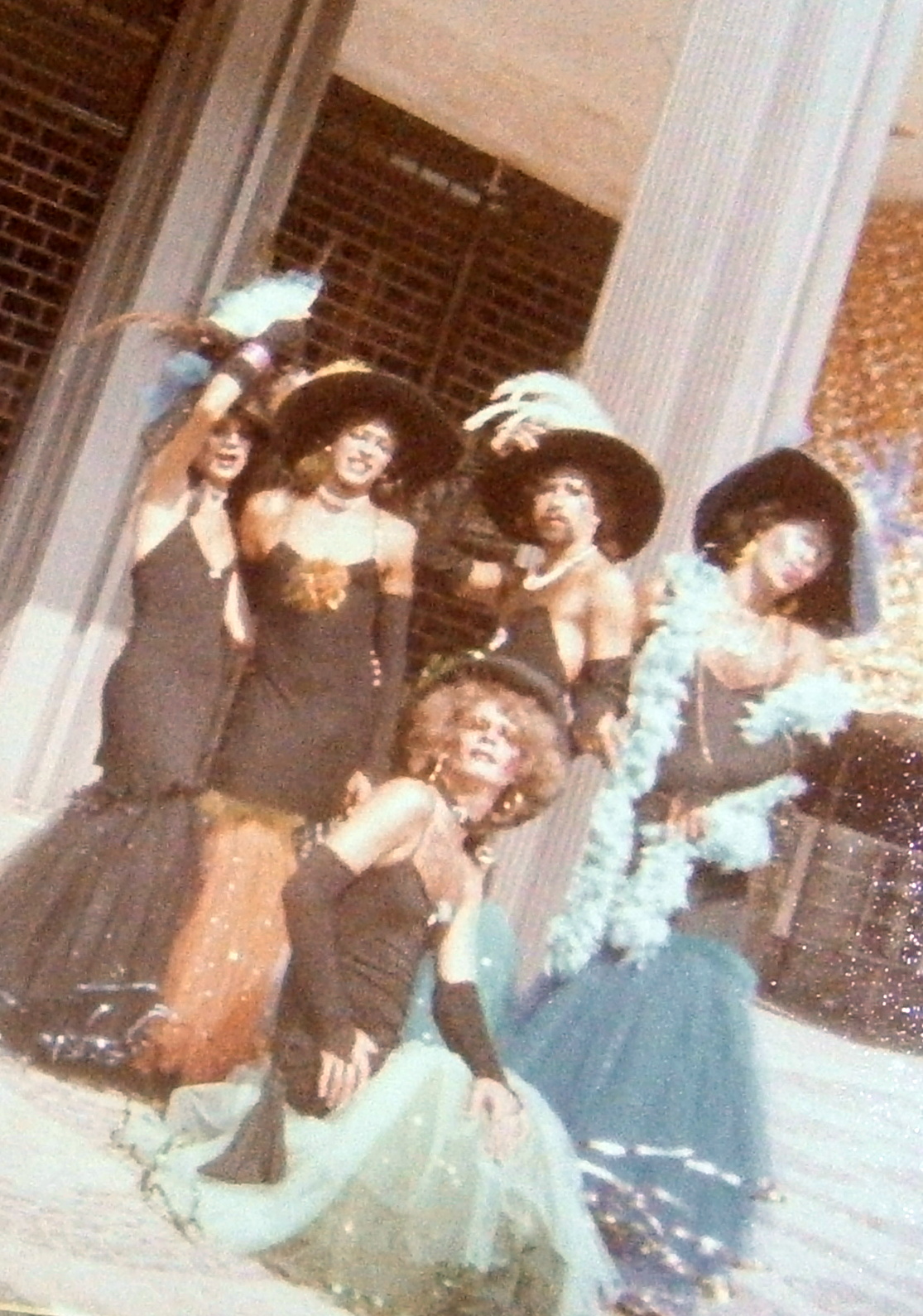
For his part, Luiz walked a fine line between giving voice to gay pride and liberation and getting the crap beaten out of him by homophobes and corrupt cops. As you might expect, his push back was always outrageous and highly fashionable.

Luiz (center left) with his grrlfriends at Carnaval.

Nowadays things have calmed a bit. Gay folks in Brazil are mostly afforded many of the same rights as our straight counterparts, with notable exceptions, and the last two presidents have been left-of-center populists that have, for the most part, overseen an economic and social resurgence that enjoys widespread support by the electorate, again, with notable exceptions.

The current climate of push back against government corruption and incompetence should not be mistaken as general dissatisfaction with progressive politics, but rather impatience regarding how slowly this thrice elected, preferred political strategy has resulted in real change on the ground in local communities and the widespread desire for the radical (as in, “by the roots”) expulsion of corrupt politicians and many civil employees.

Aside from our deliberate and unmistakable “out” lifestyle and my utilizing (sometimes surreptitiously) my position as teacher to encourage students to think through the value of political engagement as a strategy to improve Brazil for all, Luiz and I feel the love of our hippie days in the kitchen (and through sex and drugs J ).


My early vegetarian/crunchy/granola days continue to shine through, much to Luiz’s dismay. Meat is now definitely on the menu in our household, but so are homemade yogurt, bread and peanut butter. My efforts to learn the art of Brazilian cooking from Luiz have been slowed by my insistence on maintaining some old favorites in our diet. While I feel that my hippie street cred is definitely bound up with my cooking habits, Luiz is happy to continue to eat just what his mother used to prepare for him as a kid and focus on living a party lifestyle.


There is a happy medium here somewhere. But while we struggle to find it, I am delighted to explore the world of organic street markets, mountain goat farms, home grown tomatoes and natural food stores. Luiz is mollified by my tossing him a bone in the form of homemade rich and creamy chocolate ice cream. There is hippie bliss tucked in among the cheese, vegetables and fresh desserts.

Friday, August 16, 2013

Red Bull cliff diving comes to Niterói

Who says the best thing about Niterói is the view of Rio? (OK, maybe everybody… well, at least every Carioca.) We Niteroiense (folks from Niterói) know better. Can I get a shout out from my brothers in Oakland, CA?
It would seem the folks at the Red Bull cliff diving championship know it too. Niterói is one of the sites hosting the Red Bull 2013 Cliff Diving World Series. They will be here September 27th and 28th on Icaraí beach – just three blocks from our apartment.
According to the official website, they are very excited. “For the first time in the history of the World Series, the world's best cliff divers touch down on the South American mainland. The place chosen to host the high diving elite is the beach of Icaraí  in Niterói,  a city in the state of Rio de Janeiro, with which it shares the Guanabara Bay. The name of the beach means "holy river" in the native language (my note: indigenous people, not the Portuguese) and used to be a place where people jumped from a platform during the 1950s.”
Actually, the diving platform on Icaraí beach, which was built in 1936, remained there until demolished in 1965. Luiz tells many a tale about skipping grade school with his little buddies and going to the beach to jump from the lower platform while his parents were unaware of his shenanigans.
The cliff diving folks at Red Bull will be constructing a temporary diving platform that reaches 27 meters above the water, significantly higher than the historic beach attraction. 
Sounds great – but did their advance team check on the water quality of Guanabara Bay and the healthfulness of swimming at Praia de Icaraí? I don’t mean to be a wet blanket here, but the official recommendation from the city, posted daily, regarding the water safety for bathers is typically “not recommended.”
Don’t get me wrong. Luiz and I swim at numerous beaches in Niterói, but they are the ocean beaches. We have yet to venture any further than ankle deep into the bay beaches, including Praia de Icaraí. But hey, they are the professionals.
The event is going to be super cool for us, but, dare I say it? It would seem the best thing about the location choice would be the view of the Christ the Redeemer statute and Sugarloaf Mountain in Rio across the bay. Ouch.

Come join the party. While you are here you can visit the landmark MAC Museum (contemporary art) just a few hundred meters up the beach (and a part of that spectacular view).

Monday, August 5, 2013

Brazil is a Third World country, remember?


Lately all eyes have been on Brazil. Whether you are a fan of the pope and watched as millions descended on Rio while it stretched its capacity to host enormous crowds, or an international travel agent already booking lodging and sightseeing packages for upcoming World Cup and Olympics visitors, or an ambitious investment fund manager making exciting new inroads into the Brazilian market that has (until recently) been outperforming many of the tired and failing options in your home country – chances are you have been wide-eyed about Brazil and its explosion onto the world stage as an all around powerhouse and emerging world hot spot.

Outside perceptions and media generalities can be deceiving.

A lot of people don’t like it when you refer to Brazil as a Third World country, especially some Brazilians. My experience, however, has been that it is Brazilians in particular that default to this kind of language. Some residents seem to use this expression as a way to explain away or justify some of the current national shortcomings and others, especially those now living abroad, would seem to use it to justify to themselves why they left their country in the first place.

I have steered clear of this label in favor of the more politically correct “developing country” mantle. My intention is to be accurate (i.e. not including Brazil among the so-called First World nations) while also trying not to give an exaggerated impression of undeveloped or backward that people may imagine when hearing “Third World.”

As described in Wikipedia, “Third World” and “developing” are seen as interchangeable terms when describing Brazil, but the term Third World is a bit antiquated since it originally simply referred to countries not aligned with either NATO (First World) or the Communist bloc (Second World). Over time the term Third World has come to be used as an economic term to describe poorer countries that have struggled to attain steady economic development.


There are no universal, agreed-upon criteria for what makes a country developing versus developed and the term Third World is rather squishy. I have come to be comfortable with the term “developing country” to describe Brazil because it seems (to me) to imply hope and real progress, leaving Third World to those times when I want to be deliberately provocative.

As long time readers of this blog know, I love Brazil. Luiz and I have never had second thoughts about our move to here nearly 6 years ago and we have no intentions to relocate any time soon. My blog is filled with all the reasons you might want to join us in this mid-life change of adventure we have created for ourselves. Here there is no shortage of daily wonders to soothe the soul and reinvigorate one’s zest for life. Brazil and Brazilians have a special kind of wow that we have experienced in few other lands – and we have visited many, many places. But yeah, when you peel back the travel brochure cover and look for the fine print, there it is: Brazil is still a developing country.


This comes as no surprise to those of us living here. While the television coverage of the upcoming World Cup and Olympic Games may focus on shiny new sports stadiums and grand openings at fancy new resort hotels, a peek behind the scenes reveals promised modern airports still in the early stages of construction (one still lacking paved roads to and from) and public policies that are displacing poor residents to make room for temporary international tourist conveniences. Rumors of political corruption, stolen public funds, illegal construction code violations and broken promises that urban development for the games will include vital infrastructure improvements for permanent residents take no one by surprise.

Persistent political corruption at all levels and shameless kowtowing to international capitalist pressures spawning shiny new millionaires at the expense of true democratic self determination and shared prosperity are the unfortunate tell tale signs of a “developing country” trying to get sturdy legs under itself. Generations of Brazilians have reluctantly grown accustomed to and somewhat hopeless regarding the stench of this political sewage and the oppressive economic inequality it sustains. Plus there are the pervasive legacy costs of political and family dynasties that have concentrated power and wealth over the years. [According to the celebrated Brazilian economist Marcio Pochman, published in the book “The Rich of Brazil” (2004), the assets of five thousand ‘very rich’ families, which account for 0.001 percent of all Brazilian families, amount to approximately 40% of the Brazilian Gross Domestic Product.]

That’s the bad news.


The good news is that Brazil is, indeed, developing. This development has been at a rather impressive pace in recent decades. Modernization in urban areas, in the commercial sector, in all areas medical and, more slowly, concerning the infrastructure that links vital population and resource centers across the country has been steady and persistent. Political reforms, while slow and somewhat limited in scope, have also been steady. Both dynamics have resulted in real and tangible improvements in the quality of life for tens of millions of Brazilians. And just like everywhere else on the planet, the internet has transformed nearly everything among those with access and among those who benefit in secondary and tertiary ways. Things are definitely looking up (i.e. developing).

What this means for Luiz and I is that, while we live in Brazil, we live in a comfortable two bedroom  apartment just down the street from a beautiful, mature urban park. We wash our clothes in a 10 kilogram capacity washing machine (although, it does not have a hot water option and we do not have a dryer, but hey…) and our refrigerator has a separate (although quite small) freezer compartment. Wireless internet service and an over-sized flat screen TV (with 3-D capability, although there are no 3-D signals in our area) as well as an imported, firm, queen size mattress round out or creature comforts.

Most of our banking is done either online or via an ATM machine, although Luiz has developed a meaningful friendly relationship with our branch manager in case of difficulties. Luiz has a cell phone, while I have eschewed said ball and chain. Most of our transportation needs are covered by bus and ferry services but our friends drive chic new cars that run on gasoline, alcohol and/or natural gas.

Regarding medical needs, we live in an insanely convenient part of town chock full of doctors’ offices, labs, ambulatory clinics, critical care facilities and full-on hospitals. We pay a relatively small monthly fee for supplemental private health care insurance that sweeps us up and over the inconveniences and limitations of the public health system, although in any possible circumstance we have medical care available.


If you squint a little and don’t try too hard to find any cracks, it looks a lot like a First World lifestyle. Most of the time it even feels like a First World lifestyle. But then, if you insist on seeing the glass half empty there is plenty to remind you that things are not all that they might first appear to be. For a listing of daily inconveniences and nearly unbelievable tales of stifling bureaucracies I kindly refer you to other blogs.

Mainly what affords us our comforts is that first and foremost we live in a modern, urban area that has been developing as a Brazilian city for more than 300 years. At some point you get paved roads, clean reliable drinking water, backup electrical power at hospitals and a police force with at least a minimum of training and support [key word: minimum]. Second, there are employment options in the area that provide a livable wage or better, and schools and universities are plentiful [even if they often lack a full complement of functioning light bulbs or ceiling fans].

Not bad, overall. But this is certainly not the case for the multitudes in the population that live in less developed cities and towns, favelas adjacent to rich urban areas and the more desperate rural parts of the country. This is where much of the Third World reality exists.


In Brazil as a whole about 35 per cent of the population lives in poverty, on less than two dollars a day. This is most visually represented by the various favelas, or slums, in the country's metropolitan areas where residents suffer with economic underdevelopment and below-par standards of living. In Brazil’s rural areas poverty affects about 51 per cent of the population. This means that Brazil has about 18 million poor rural people, the largest number in the Western Hemisphere. Poor rural communities live in disadvantaged conditions: education and health facilities are not readily available, water supply and sewage systems are generally inadequate, and rural people face severe constraints in accessing technology and infrastructure. [sourced here]


The degree to which you feel the “developing” part of living in Brazil is directly related to your place on the class ladder. Here people with money generally have A LOT of money and can buy their way into a pretty good facsimile of a First World lifestyle. Poor folks, as usual, are shit out of luck. The oft-touted newly emerging Brazilian middle class (myth for a future post) tends to enjoy just enough of an income to buy into a look-alike First World lifestyle without the political/economic/consumer goods quality underpinnings to back it up. [Aside: the vastly expanded consumer credit market in this regard is a ticking time bomb.]

Visitors to Brazil quickly notice the gulf between the haves and the have-nots. Years of government investments in the tourism sector has bolstered the infrastructure for travelers so they can have more of a modern, convenient experience. Tourists who never leave the beaches in Rio and who cannot understand the Portuguese newsprint or television reports may never know they are vacationing in a developing country.


We who live here know Brazil is in a state of development. The struggles to develop are not subtle or inconsequential to our regular lives. Political push back from the general population against governmental corruption and incompetence has been on the rise. The growing number of people lifted out of poverty in recent years (thanks to some good governmental action) has created a new class of citizens who have no intention of going back to the desperate poverty they left behind. At this point it is develop or bust. But it is not easy and it will take more time.


So if you are among the throngs who will be coming to Brazil for the 2014 World Cup or the 2016 Olympic Games, be patient with us. We really are trying to provide you with a comfortable, drama-free adventure. But we are also trying to get reliably clean drinking water and doctors on call to millions of our fellow countrymen and their families.